
BMI for kids adults and seniors can be confusing. This guide makes it easy. We explain what changes by age, how to read charts, and when BMI is helpful or not. You can also check your number fast with our BMI calculator at BMI Calculator.
What is BMI?
BMI means Body Mass Index. It uses your height and weight to make one number. It is a quick screen, not a full health check.
The basic formula is: or
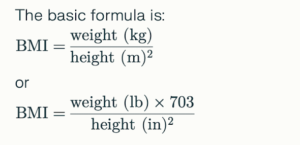
In real life, people use BMI to see a general weight range. Then they look deeper if needed.
BMI for kids (ages 2–19)
Kids do not use adult BMI ranges. They use BMI-for-age percentiles. This means we compare a child’s BMI to other kids of the same age and sex.
Simple way to think about percentiles:
-
- 5th percentile means lower than 5 out of 100 kids.
- 85th percentile means higher than 85 out of 100 kids.
Common kid categories:
-
- Underweight: below the 5th percentile
- Healthy weight: 5th to less than 85th
- Overweight: 85th to less than 95th
- Obesity: 95th or higher
These are screening ranges, not a diagnosis. If you have questions, ask a pediatric clinician.
Child example
-
- Age: 10, girl
- Height: 4 ft 8 in (142 cm)
- Weight: 90 lb (41 kg)
Her BMI might place her around the 85th to 90th percentile. That is in the overweight range. A doctor may check habits, sleep, and activity next.
BMI for adults (ages 20–64)
Adults use one set of standard BMI ranges. These are common worldwide.
-
- Underweight: less than 18.5
- Healthy weight: 18.5 to 24.9
- Overweight: 25.0 to 29.9
- Obesity: 30.0 or higher
From practical use, BMI gives adults a helpful starting point. It shows trends over time.
Adult example
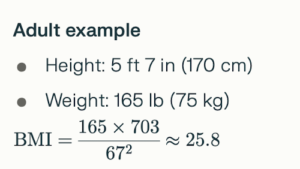
A BMI near 25.8 is in the overweight range. Next steps might include checking waist size and habits.
BMI for seniors (65+)
Bodies change with age. Muscle often goes down. Fat can shift to the belly. Bones may get lighter. Because of this, BMI can miss things in seniors.
Two seniors can have the same BMI but different body fat. One may have low muscle and higher belly fat. So BMI can look “normal” while risks are higher.
Many guides suggest the best BMI can shift a bit with age. The right range can depend on health, meds, and strength. It is a good idea to ask a clinician what is best for you.
Senior example
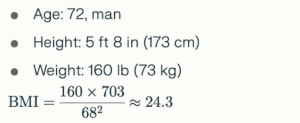
BMI of about 24.3 is in the healthy adult range. But if he has lost muscle and gained belly fat, a waist check can add useful info.
Why BMI changes with age
-
- Growth and hormones: Kids grow fast. Percentiles track normal changes by age and sex.
- Muscle and bone: Adults often keep more muscle. Seniors often lose muscle and bone.
- Fat pattern: Men tend to gain belly fat. Women change patterns around menopause.
- Activity: School, work, and retirement change how we move and eat.
These shifts affect BMI and how we read it.
When BMI works well
-
- You want a quick weight screen.
- You track changes over months.
- You compare groups in studies.
- You need a simple number most clinics understand.
For many adults, BMI is a fair first look.
When BMI does not work well
-
- Athletes and very muscular people (BMI reads high).
- Seniors with low muscle (BMI may look normal).
- Very short or very tall adults (math scaling limits).
- Pregnancy (use different guidance).
- Children and teens (must use percentiles).
From practical use, I always add other checks for these groups.
Helpful checks to use with BMI
-
- Body fat percent: Shows fat vs muscle. Scales and calipers can estimate it.
- Waist size: Measure at your belly button. Larger waist often means more belly fat.
- Waist-to-height: Your waist should be less than half your height.
- Fitness and strength: Energy, walking speed, and grip strength tell a lot.
- Health habits: Food quality, sleep, stress, and daily steps matter.
These give a fuller picture than BMI alone.
Simple examples by age
Child (percentile use)
-
- Age: 8, boy
- Height: 4 ft 3 in (130 cm)
- Weight: 77 lb (35 kg) His BMI plots on a growth chart. If it lands near the 95th percentile, that is in the obesity range for kids. A family can review snacks, sleep, and play time.
Adult (standard ranges)
-
- Height: 5 ft 10 in (178 cm)
- Weight: 190 lb (86 kg)
- BMI ≈ 27.3 This is overweight. A waist check and steps per day can guide next steps.
Senior (check muscle and waist)
-
- Age: 68, woman
- Height: 5 ft 3 in (160 cm)
- Weight: 125 lb (57 kg)
- BMI ≈ 22.1 BMI looks healthy. If muscle is low and waist is high, she may still improve strength and daily movement.
How to check BMI quickly
You can do the math, or you can use a tool. Try our fast BMI calculator at BMI Calculator. Enter your height and weight. See your BMI and category in seconds.
Tips for families
-
- Use BMI as a starting point.
- For kids, always look at age- and sex-based percentiles.
- For adults, add waist size and habits.
- For seniors, check strength, balance, and energy too.
- Track trends, not just one reading.
- If you are unsure, ask a health professional.
In real life, small steps help. More water, more steps, better sleep, and simple meals can move the needle.
Conclusion
BMI for kids adults and seniors is not one-size-fits-all. Kids use percentiles. Adults use standard ranges. Seniors need extra checks for muscle and waist. Use BMI as a quick screen, then add other simple measures. To see your number now, visit the BMI calculator at BMI Calculator.
FAQ: BMI for Kids, Adults, and Seniors
Do kids use the same BMI chart as adults?
No. Kids use BMI-for-age percentiles by age and sex. Adult cutoffs do not apply to children and teens.
What is a healthy BMI for adults?
For most adults, healthy BMI is 18.5 to 24.9. This is a screen, not a diagnosis. Other factors still matter.
Is BMI reliable for seniors?
BMI can miss low muscle and belly fat in older adults. Add waist size and strength checks for a better view.
Can athletes trust BMI?
Often not. Muscle can raise BMI even when body fat is low. Use waist size and body fat percent too.
How can I check my BMI?
Use our simple BMI calculator at BMI Calculator. It is fast and beginner-friendly.