
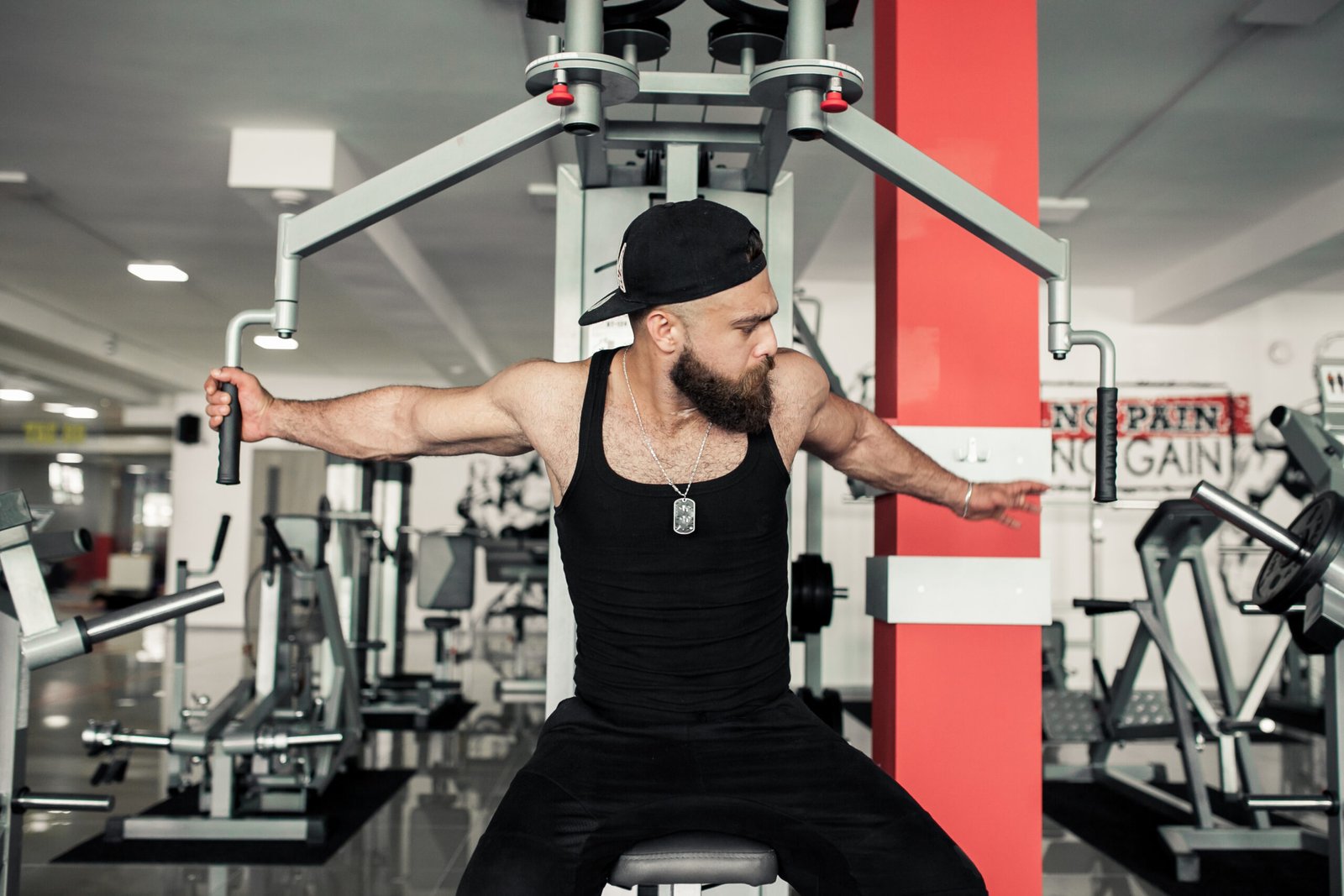
Your one rep max (1RM) is useful, but safety comes first.
You can calculate one rep max safely without ever lifting your true max.
What Is One Rep Max (1RM)?
One rep max (1RM) is the heaviest weight you can lift one time with good form.
You have a different 1RM for each exercise, like squat, bench press, or deadlift.
For example:
-
- The most you can bench press once.
- The most you can squat once.
You do not need to test this with a “max attempt” to use it in training.
Why Direct 1RM Testing Can Be Risky
Trying to find your true 1RM by lifting your absolute heaviest weight can be unsafe, especially for beginners.
Risks include:
-
- Poor form when the weight gets too heavy.
- Extra stress on joints, lower back, and shoulders.
- Higher chance of muscle strains or accidents if you have no spotter.
Direct max testing is usually not needed for:
-
- Beginners.
- People training alone.
- People with past injuries or health issues.
A safer way is to estimate 1RM using lighter weights and more reps.
Safer Way: Estimate 1RM Instead of Testing It
You can calculate one rep max safely using a submaximal set.
This means you lift a weight you can manage for several reps, not just one.
Basic idea:
-
- Lift a light-to-moderate weight for 5–10 reps.
- Use that number (weight + reps) in an online calculator.
- The calculator gives you an estimated 1RM.
This is usually close enough for planning workouts and much safer for your body.
Step-by-Step: How to Estimate 1RM Safely
Here is a simple method you can use for most big lifts (squat, bench, deadlift, etc.).
Step 1: Warm Up Properly
-
- Start with 5–10 minutes of light movement (bike, treadmill, or brisk walk).
- Do 1–2 light sets of the exercise with very low weight.
Example for bench press:
-
- Set 1: Just the empty bar, 10–12 reps.
- Set 2: Light weight, 8–10 reps.
This prepares your muscles and joints.
Step 2: Choose a Safe Working Weight
Pick a weight you think you can lift about 6–10 times with good form.
Examples:
-
- Bench press: 30–40 kg for a beginner.
- Squat: 40–50 kg for a beginner.
You should feel challenged but not scared.
If it feels too heavy during warm-up, lower the weight.
Step 3: Do One Controlled Set
-
- Lift that chosen weight for as many clean reps as you can.
- Stop when your form starts to slip, even a little.
- Do not go to total failure where the bar gets stuck.
For example:
-
- You bench 35 kg and manage 8 good reps.
- You squat 50 kg and manage 7 good reps.
Write down:
-
- The weight.
- The number of reps.
Step 4: Use an Online 1RM Calculator
Now you can use a simple online tool to calculate one rep max safely.
-
- Go to a 1RM calculator, like this: One Rep Max Calculator.
- Enter the weight and the reps you did.
- The tool shows your estimated 1RM for that lift.
Example:
-
- 35 kg × 8 reps on bench → maybe around 44–47 kg estimated 1RM.
- 50 kg × 7 reps on squat → maybe around 60–65 kg estimated 1RM.
This is only an estimate, but it is good enough for planning safe training weights.
How to Use Your Estimated 1RM in Training
Once you know your estimated 1RM, you can choose sensible weights.
Simple guide:
-
- 50–60% of 1RM:
- Light weight.
- Good for warm-up and learning technique.
- 60–75% of 1RM:
- Medium weight.
- Good for most beginner sets (8–12 reps).
- 50–60% of 1RM:
Example with an estimated squat 1RM of 70 kg:
-
- 50% → about 35 kg (warm-up, higher reps).
- 65% → about 45 kg (3 sets of 8–10 reps).
You do not need to lift your full 1RM in normal workouts.
Light-to-Moderate Weight Examples
Here are simple, safe examples for beginners using estimated 1RM.
Bench Press Example
Estimated 1RM: 45 kg
-
- Warm-up:
- Empty bar, 10–12 reps.
- 25 kg, 8 reps.
- Working sets (about 60–65%):
- 27–30 kg for 3 sets of 8–10 reps.
- Warm-up:
Squat Example
Estimated 1RM: 70 kg
-
- Warm-up:
- Bodyweight squats.
- 30 kg, 8 reps.
- Working sets (about 60–70%):
- 42–49 kg for 3 sets of 8–10 reps.
- Warm-up:
These weights should feel challenging but controlled, with good form.
Important Safety Tips
-
- Never max out alone, especially on bench press.
- Always focus on form first, weight second.
- Increase weight slowly over weeks, not in big jumps.
- Stop the set if you feel sharp pain, dizziness, or something “wrong”.
- If you have health issues, talk to a doctor or trainer before heavy lifting.
Remember: the goal is to get stronger without getting hurt.
FAQs About Calculating One Rep Max Safely
-
- Do I have to test my true 1RM to get stronger?
No. You can estimate your 1RM using lighter sets and a calculator. This is much safer and still very effective for planning workouts. - How many reps should I use for a safe 1RM estimate?
Usually 5–10 reps with a weight that feels challenging but still controlled. Fewer than 5 reps can be too heavy for beginners. - How often should I recalculate my estimated 1RM?
Every 6–8 weeks is enough for most people. You can also update it when your usual training weights start to feel much easier. - Can I use this method for all exercises?
You can use it for most big lifts, like squats, bench press, deadlift, overhead press, and even some machine exercises. - What if I don’t want to think about percentages at all?
That’s okay. You can still use the One Rep Max Calculator just to understand your strength level, then simply choose weights that feel “moderate to hard” with good form.
- Do I have to test my true 1RM to get stronger?
This way, you calculate one rep max safely and use it as a helpful tool—not a dangerous test.