
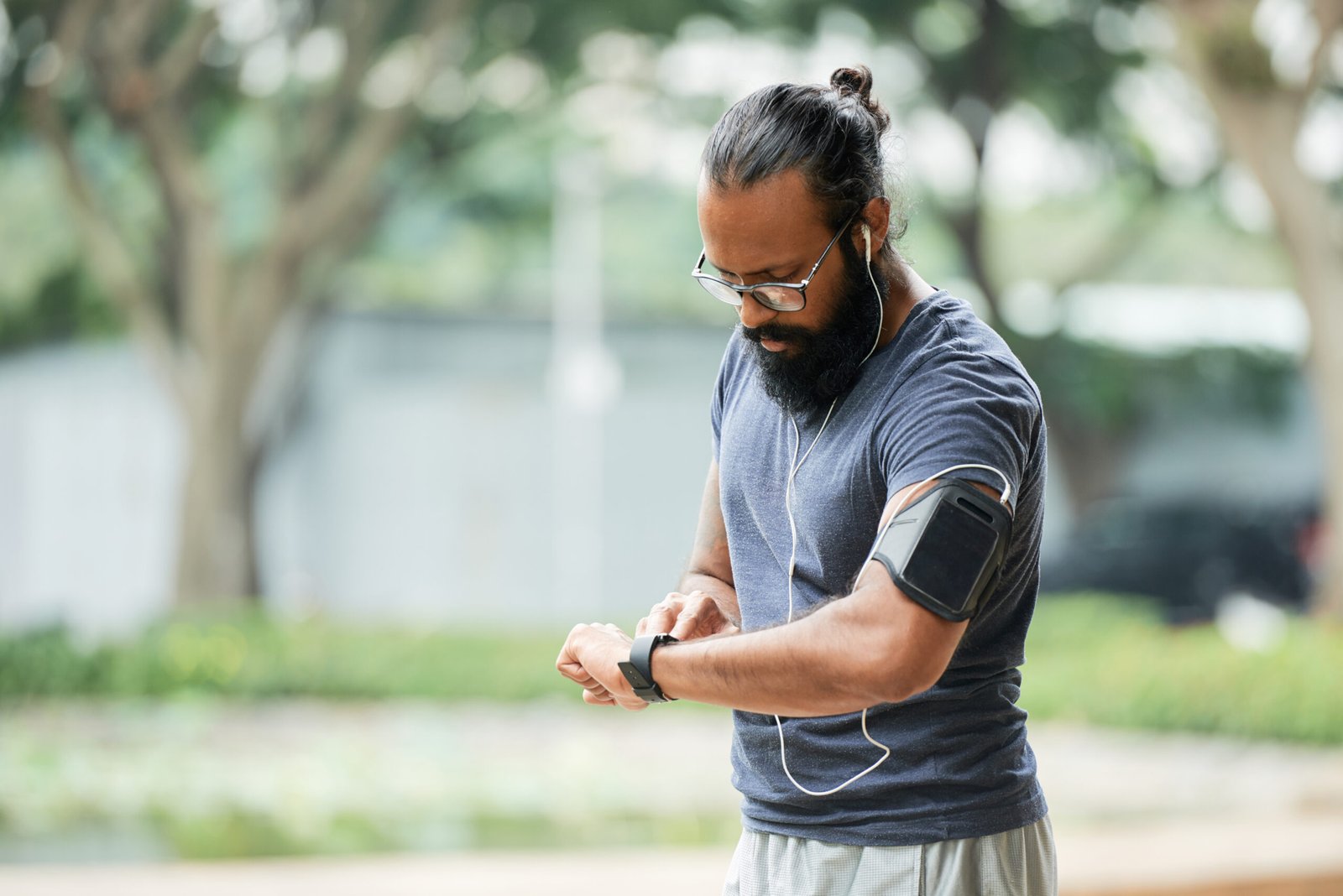
Measuring your heart rate during exercise is simple once you learn a few easy methods.
You can use your fingers, a watch, or an app to see how hard your heart is working.
Why Measure Heart Rate During Exercise?
Your heart rate shows how hard your body is working.
When it goes up, your heart is pumping more blood and oxygen to your muscles.
Checking your heart rate helps you:
-
- Stay in a safe effort zone.
- Avoid working too hard or too little.
- Match your workout to your goal (health, fitness, or weight control).
You can also use a target heart rate tool like this one to see your personal range: Target Heart Rate Calculator.
How to Measure Heart Rate by Hand (Step by Step)
You can check your heart rate using just your fingers.
The best time is during a short pause in your workout.
Step 1: Pause Safely
-
- Slow down or stop moving for a moment.
- Stand or sit still so you can feel your pulse clearly.
Step 2: Find Your Pulse
You can use your wrist or neck.
Wrist pulse:
-
- Turn your palm up.
- Place your index and middle fingers on the thumb side of your wrist, just below the base of your thumb.
- Press gently until you feel the beats.
Neck pulse:
-
- Place your index and middle fingers on one side of your neck, next to your windpipe.
- Press gently until you feel the beats.
- Do not press too hard, and only on one side.
Do not use your thumb, because it has its own pulse and can confuse you.
Step 3: Count the Beats
An easy way:
-
- Count the beats for 15 seconds.
- Multiply the number by 4.
Example:
You count 32 beats in 15 seconds.
32 × 4 = 128 → your heart rate is 128 beats per minute (bpm).
If you like, you can also count for 30 seconds and multiply by 2, or count for the full 60 seconds.
Using Fitness Watches and Heart Rate Monitors
Many people like using devices because they show heart rate in real time.
Common options:
-
- Fitness watches / trackers
- Worn on the wrist.
- Use light sensors to read your pulse.
- Show your heart rate on the screen while you walk, run, or cycle.
- Chest strap monitors
- Worn around the chest.
- Often very accurate.
- Send heart rate to a watch or phone app.
- Phone apps and gym machines
- Some phones use the camera or sensors to estimate heart rate, usually when you are still.
- Some treadmills, bikes, or ellipticals have hand grips that show heart rate, though they can be less accurate.
- Fitness watches / trackers
For most beginners, a simple wrist tracker is enough.
You can glance down during your workout to see if you are in your target range.
How Often Should You Check Your Heart Rate?
You do not need to stare at your heart rate all the time.
Simple ideas:
-
- At the start:
- Check once after the first 5–10 minutes, to see if you’re in a comfortable range.
- During the middle:
- Check every 5–10 minutes, or when you change speed.
- At the end:
- Check again when you finish, to see how your heart rate is coming down.
- At the start:
Over time, you will learn how different heart rate numbers feel.
You may start to know your effort level even without checking often.
Connecting Heart Rate to Effort (Talk Test)
You can mix heart rate checks with the “talk test”:
-
- If you can talk easily, your heart rate is probably in a light zone.
- If you can talk in short sentences, you’re likely in a moderate zone.
- If you can only say a few words before needing a breath, you’re in a hard zone.
This helps you adjust your pace even when you’re not looking at a watch.
Safety Tips for Beginners
-
- Start slow, especially if you are new to exercise.
- Aim for easy to moderate effort at first (where you can still talk).
- Stop and rest if you feel:
- Chest pain
- Strong dizziness
- Trouble breathing
- Unusual heart pounding
If you have heart problems, high blood pressure, are on heart medicine, or are unsure what’s safe, talk with a doctor before doing hard workouts.
Remember:
Heart rate numbers are guides, not tests you must pass.
How a Target Heart Rate Calculator Can Help
A target heart rate calculator can tell you a safe and useful bpm range based on your age.
You can use: Target Heart Rate Calculator
You usually:
-
- Enter your age.
- Get suggested ranges for moderate and vigorous exercise.
Then, while exercising:
-
- Check your heart rate (by hand or device).
- See if you are roughly inside that range.
- Adjust speed to stay in a zone that feels safe and doable.
FAQs About Measuring Heart Rate During Exercise
-
- Do I need a special device to measure my heart rate?
No. You can use your fingers on your wrist or neck and count beats for 15 seconds, then multiply by 4. A watch or tracker just makes it easier. - How accurate are fitness watches?
Most modern trackers are fairly accurate for daily use, but they are not perfect. Chest straps are usually more accurate. For beginners, a wrist tracker is usually good enough. - How high should my heart rate go during exercise?
That depends on your age, fitness, and health. A target heart rate calculator and your doctor can help you find a safe range for you. - Is it bad if my heart rate is very high for a short time?
A brief spike can happen, but if you feel chest pain, strong dizziness, or cannot breathe well, stop and get help. When in doubt, stay on the safer, lower side. - Do I have to measure heart rate every workout?
Not always. It’s helpful when you start or when you change your routine. Once you know how different zones feel, you can check less often and use heart rate as an occasional guide.
- Do I need a special device to measure my heart rate?