
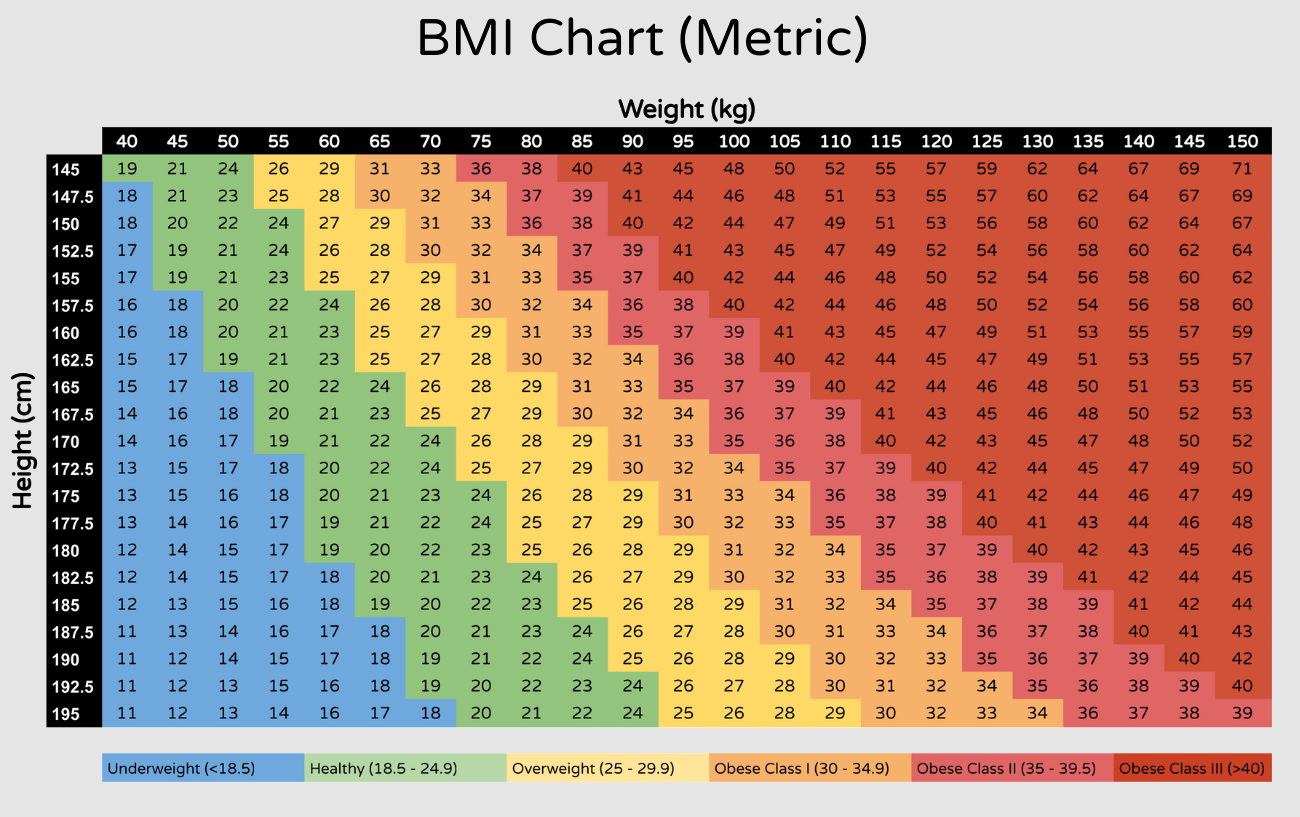
Ideal weight and BMI are both just tools.
Neither one is perfect, but both can help you think about a healthy weight in a simple way.
What Is “Ideal Weight”?
“Ideal weight” usually means a healthy weight range for your height, age, and sex.
It often comes from formulas that use your height and sometimes your frame size.
Key points:
-
- Taller people usually have a higher ideal weight than shorter people.
- Men often have a slightly higher ideal weight than women at the same height, because they usually have more muscle.
- Ideal weight is a range, not one perfect number.
You can see example ranges for your height using a simple tool like Ideal Weight Calculator., instead of doing the math yourself.
What Is BMI?
BMI (Body Mass Index) is a number made from your height and weight.
It is used to sort adults into basic groups:
-
- Under 18.5 → underweight
- 18.5–24.9 → “healthy weight”
- 25–29.9 → overweight
- 30 and above → obesity
BMI does not measure fat directly.
It is just a quick screening tool doctors use to see if weight might affect health.
Simple Example: Same Height, Different Bodies
Imagine two people:
-
- Both are 170 cm tall.
- Both weigh 75 kg.
Their BMI is the same.
But:
-
- Person A is a runner with more muscle and low body fat.
- Person B hardly moves and has more body fat.
Their BMI and many ideal‑weight formulas might say both are “a bit high”.
But Person A could still be very healthy, because much of that weight is muscle.
This shows:
-
- BMI and ideal weight can’t see muscle vs fat.
- They are only starting points, not final answers.
Pros and Cons: Ideal Weight
Pros
-
- Gives you a simple range based on height (and sometimes sex and age).
- Easy to understand: “For my height, many people are healthy between X and Y kg.”
- Helpful for gentle goal setting, not extreme targets.
Cons
-
- Does not know your muscle, body fat, or frame size.
- Very muscular people may seem “too heavy” by ideal‑weight charts.
- Can make people chase one “perfect” number instead of a healthy range.
Best use:
As a soft guide to see roughly where a healthy weight for your height might sit.
Pros and Cons: BMI
Pros
-
- Very quick to calculate with height and weight.
- Widely used in research and clinics to link weight with disease risk.
- Good screening tool for many average adults.
Cons
-
- Does not separate muscle from fat.
- Can mislabel athletes, older adults, or some ethnic groups.
- Not meant to be the only measure of your health.
Best use:
As a first check to see if weight might be an issue, then talk with a doctor who can look deeper.
Ideal Weight vs BMI – Which Is Better?
Neither is “best” for everyone.
They answer slightly different questions:
-
- Ideal weight asks: “For my height, what weight range is often healthy?”
- BMI asks: “For my height and weight, does my number fall in underweight, healthy, overweight, or obesity?”
For most beginners:
-
- Ideal‑weight ranges are easier to picture.
- BMI is easier to compare with medical charts and research.
The safest way is to:
-
- Use ideal weight and BMI as information only.
- Not judge yourself by one number.
- Combine them with other signs like waist size, energy, blood tests, and how you feel.
When to Use Each One
Use ideal weight (via a tool like Ideal Weight Calculator) when you:
-
- Want to see a rough healthy range for your height.
- Prefer to think in “kilos or pounds” instead of abstract BMI numbers.
- Are setting gentle, long‑term goals, not strict diets.
Use BMI when you:
-
- Are filling in medical forms or using a doctor’s calculator.
- Want to check general risk levels from official charts.
- Need a simple number to track over time with your doctor.
Always remember:
Feeling stronger, sleeping better, and improving blood tests matter more than moving from BMI 25 to 24.9 or hitting some exact “ideal weight”.
FAQs About Ideal Weight vs BMI
-
- Is BMI the same as ideal weight?
No. BMI is a single number from height and weight that falls into groups (underweight, healthy, overweight, obesity). Ideal weight usually means a weight range that may be healthy for your height. - Which is more accurate, ideal weight or BMI?
Neither is perfect. Both ignore muscle vs fat and frame size. They are best used as rough guides, not exact truth. Health checks and lifestyle matter more. - I have “overweight” BMI but feel fit. Should I worry?
Not always. If you have good fitness, normal blood tests, and your doctor is not concerned, a slightly high BMI or ideal‑weight number may be fine—especially if you have more muscle. - How can I find my ideal weight easily?
Use a simple calculator like Ideal Weight Calculator. It shows estimated ideal‑weight ranges for your height using common formulas and healthy BMI ranges. - What’s the best way to track healthy weight over time?
Use a mix of tools: BMI or ideal‑weight range, waist size, how your clothes fit, energy levels, and check‑ups with your doctor. Don’t rely on just one number.
- Is BMI the same as ideal weight?