
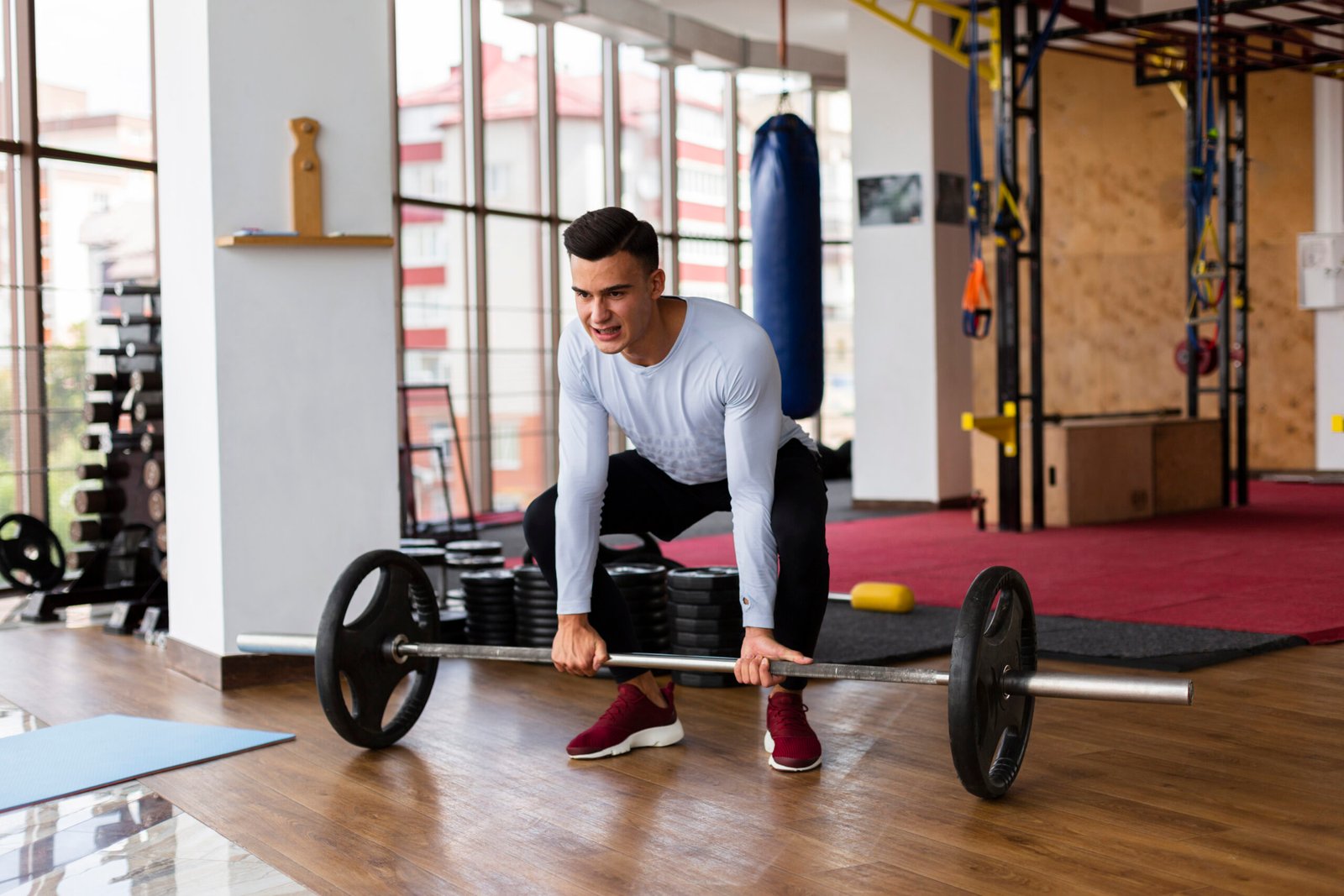
Your one rep max is like a strength “marker” for each lift.
It helps you plan smart workouts instead of guessing your weights.
What Is One Rep Max (1RM)?
One rep max (1RM) is the heaviest weight you can lift one time with good form.
You have a different 1RM for each exercise, like squat, bench press, or deadlift.
You do not need to test this with a real max lift.
Most beginners should estimate it using lighter weights and a simple one rep max calculator.
Why 1RM Matters in Strength Training
Knowing your 1RM gives you a clear starting point.
You stop guessing and start using planned weights.
It helps you:
-
- Choose the right weight for each workout.
- Train hard enough to grow, but not so hard that you get hurt.
- Track progress over time as your estimated 1RM goes up.
Instead of “I’ll just lift whatever feels right today”, you have a simple guide.
Simple Idea of Training Percentages
Most strength plans use percentages of your 1RM.
Think of your 1RM as 100%.
Then you use:
-
- 50–60% of 1RM: Light weight, good for warm-up and learning form.
- 60–75% of 1RM: Medium weight, more reps, good for beginners and muscle building.
- 75–85% of 1RM: Heavy but controlled, fewer reps, good for strength.
Beginners usually stay in the light to medium range.
Very heavy lifting (close to 90–100%) is for later, with more experience and good guidance.
Beginner Strength Example: Squat
Let’s say your estimated squat 1RM is 80 kg (from the calculator).
You could plan like this:
-
- Warm-up:
- 30–40 kg, easy reps, just to get moving.
- Working sets (around 60–70%):
- 50–55 kg for 3 sets of 8–10 reps.
- Warm-up:
This weight is:
-
- Light enough to keep good form.
- Heavy enough to challenge your muscles.
You don’t need to lift 80 kg every time.
You only use that number to choose safe training weights.
Beginner Strength Example: Bench Press
Imagine your bench press 1RM is 50 kg.
Your plan might look like:
-
- Warm-up:
- 20–30 kg, easy reps.
- Working sets (about 60–70%):
- 30–35 kg for 3 sets of 8–10 reps.
- Warm-up:
Over time, the same weight feels easier.
Then you can add a small amount, like 2.5 kg, and your strength slowly grows.
How 1RM Helps You Avoid Doing Too Much
Without a 1RM guide, beginners often:
-
- Choose weights that are too heavy, lose form, and risk injury.
- Or choose weights that are too light, and never really get stronger.
Using 1RM:
-
- Keeps your training inside a safe zone.
- Lets you get better step by step.
- Helps you avoid copying someone else’s weights, which might be wrong for you.
It turns “ego lifting” into planned lifting.
Estimating 1RM Safely (Not Testing Heavy)
For most beginners, it’s better to estimate 1RM than to test it directly.
A safe way:
-
- Pick a weight you can lift 6–10 times with good form.
- Do one set close to your limit, but stop before your form breaks.
- Enter the weight and reps into an online one rep max calculator.
This gives a close estimate of your 1RM.
Good enough to plan training, without risking your joints or back.
How 1RM Shows Progress Over Time
You don’t need to chase bigger numbers every week.
But you can check your estimated 1RM every few months.
Signs of progress:
-
- You can lift the same weight for more reps.
- The calculator shows a higher estimated 1RM.
- Your training weights (like 60–70% of 1RM) slowly go up.
This is proof that your strength training is working, even if you don’t test a true max.
Simple Tips for Using 1RM in Real Life
-
- Use 1RM as a guide, not a challenge.
- Keep most of your sets in the medium range (around 60–75%).
- Focus on smooth, controlled reps with good form.
- Increase weight in small steps when sets start to feel easy.
- Rest enough between sessions so your muscles can recover.
If you have pain, past injuries, or health issues, talk with a trainer or health professional before heavy lifting.
FAQs About One Rep Max for Strength Training
-
- Do I need to know my exact 1RM to get stronger?
No. An estimated 1RM from lighter sets is enough for most people. You can still plan good workouts and progress safely. - How often should I check my 1RM?
For beginners, every 2–3 months is plenty. Your normal training weights and reps will already show you if you are getting stronger. - Is it safe to test my true 1RM as a beginner?
Usually no. It’s better to estimate with submaximal (lighter) sets, especially if you don’t have a coach or spotter. - Why do programs say “lift 70% of your 1RM”?
Because percentages make it easy to match the workout to your strength. 70% of 1RM is challenging but usually still safe for several reps. - Can I use 1RM for machines, or only free weights?
You can use 1RM ideas for both. Just estimate using a weight and reps on that specific machine or exercise, then plan your sets from there.
- Do I need to know my exact 1RM to get stronger?